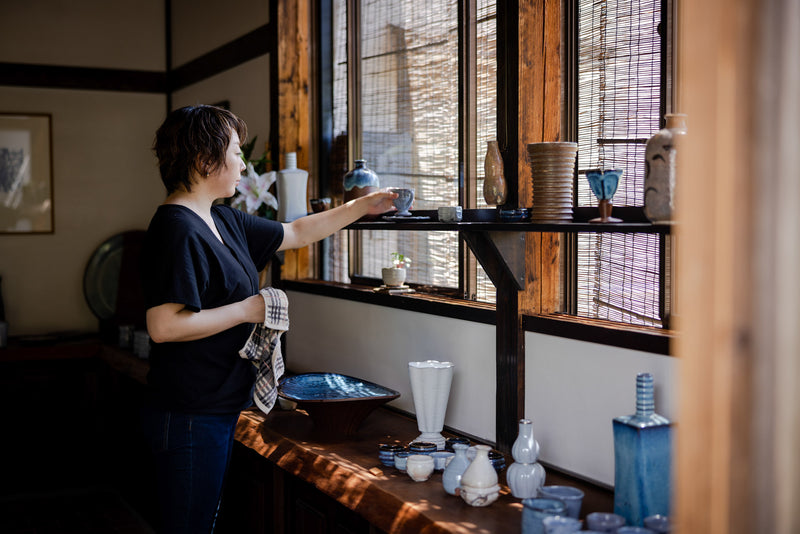
Shiraiwa-yaki Waheegama is the only operating kiln producing Shiraiwa-yaki, an Akita ceramic tradition that originated in the Edo period and was revived by the Watanabe family in 1975 after seven decades of dormancy. The kiln is run today by Aoi Watanabe, who inherited it from her mother Sunao and father Toshiharu.
Shiraiwa-yaki was first established when Unshichi Matsumoto, a potter known for his work on Oborisoma ware, was invited to Akita in the late 18th century to develop local materials. He discovered high-quality clay in Shiraiwa and founded the region's first kiln. At its peak, Shiraiwa-yaki supported as many as 5,000 potters. The industry collapsed after the Akita Semboku Earthquake of 1914 and subsequent shifts of the Meiji period, and no production continued for seventy years. Sunao Watanabe, a descendant of an Edo-period Shiraiwa-yaki family, revived the craft as a young university graduate in 1975.
Their studio/shop in Kakunodate
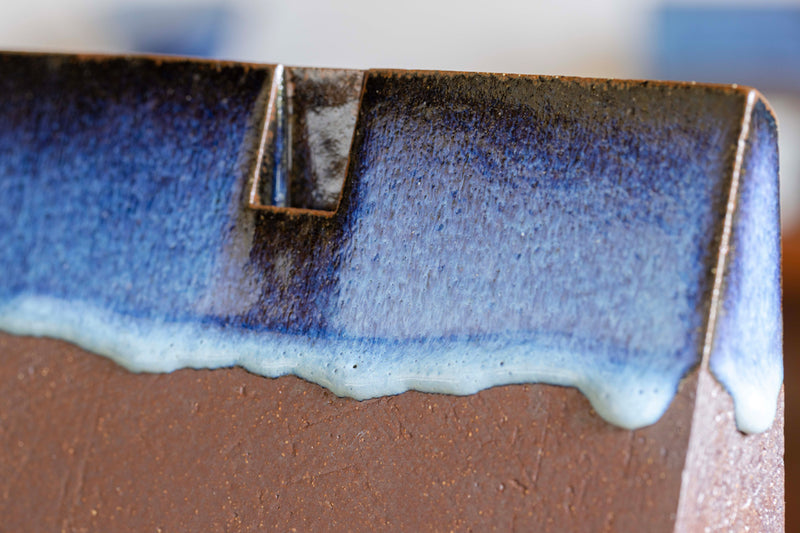
The Waheegama kiln was established by Sunao and Toshiharu Watanabe in 1978. Using local materials, they spent twenty years developing the kiln's two signature glazes: a red-brown doro glaze and the speckled namako glaze (海鼠釉), named for its resemblance to sea cucumber skin. The four-chamber climbing kiln was completed by Toshiharu in 1993.
Aoi Watanabe took over the kiln voluntarily and has introduced contemporary forms to the tradition, drawing influence from Scandinavian design and incorporating gold plating and rokurome techniques she studied in Kyoto. Toshiharu's work, meanwhile, continues to span classical matcha bowls for tea ceremony and abstract sculpture influenced by 19th- and 20th-century modern art.